PE Is Not Just One Type: How Do HDPE, LDPE, and LLDPE Differ?
HDPE, LDPE, and LLDPE differ primarily in the degree of branching in their molecular chains. This structure influences density, stiffness, flexibility, and applications: HDPE is rigid, LDPE is soft, and LLDPE is tough.
This article compares their structures, properties, processing characteristics, and selection criteria to help businesses reduce product defects, scrap, and trial costs.
What Is PE (Polyethylene)?
Definition and Origin from Ethylene
PE is a polymer produced through the polymerization of ethylene, with the repeating unit –CH₂–CH₂–.
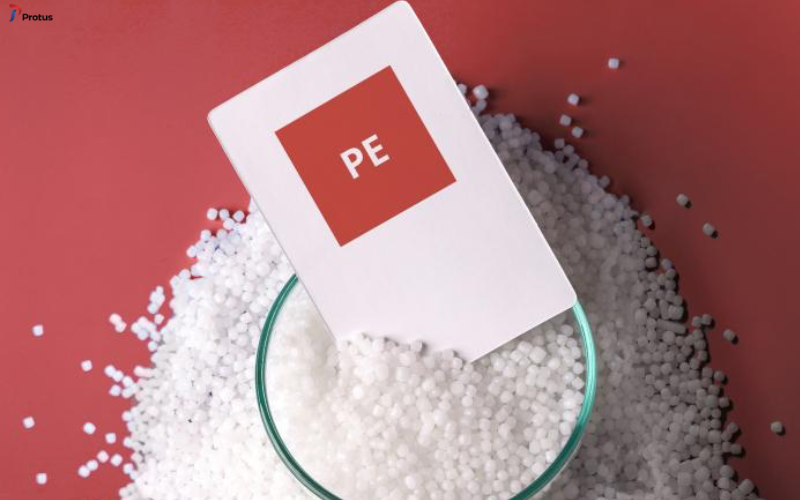
PE is a thermoplastic polymer formed by linking thousands of ethylene molecules into long chains.
Why Can One Polymer Form Different Types of Plastic?
Branching affects how closely polymer chains pack together, changing crystallinity and density.
Position Among Thermoplastics
PE is among the world’s most widely used thermoplastics and can be melted for shaping.
What Is HDPE? Characteristics of High-Density Polyethylene
Molecular Structure and Production Process
HDPE has little branching and is typically produced at low pressure using Ziegler–Natta or Phillips catalysts.
Key Properties
HDPE is rigid, strong, and usually opaque; it resists many chemicals and offers better heat resistance than LDPE.
Common Applications
HDPE is used for water pipes, jerry cans, milk bottles, bins, pallets, and stiff thin films.

LDPE is commonly used to make irrigation tubing.
What Is LDPE? Characteristics of Low-Density Polyethylene
Molecular Structure and Production Process
LDPE contains both short branches and numerous long branches and is produced through high-pressure free-radical polymerization.
Key Properties
LDPE is soft, flexible, relatively transparent, and easy to process; its tensile strength is generally lower than that of HDPE.
Common Applications
LDPE is used for plastic bags, food wrap, shrink film, squeeze bottles, and paper coatings.
What Is LLDPE? Characteristics of Linear Low-Density Polyethylene
Molecular Structure
LLDPE has a linear backbone with short branches introduced by comonomers such as 1-butene, 1-hexene, or 1-octene.
Key Properties
LLDPE offers high elongation and puncture resistance; tear resistance depends on film orientation.
Common Applications
LLDPE is used for pallet stretch wrap, agricultural films, heavy-duty bags, and multilayer films.

LLDPE is soft, flexible, transparent, and easy to process.
Comparison Tables: HDPE, LDPE, and LLDPE
The following values are indicative; consult the technical data sheet (TDS) for each grade.
| PropertyHDPELDPELLDPE | |||
| Density, g/cm³ | 0.941–0.970 | 0.910–0.935 | 0.915–0.940 |
| Crystallinity | High | Low | Moderate |
| Melting point, °C | 125–135 | 105–115 | 120–130 |
| Stiffness | High | Low | Low–moderate |
| Transparency | Low | Fairly good | Grade-dependent |
| Tensile strength | Generally high | Generally lower | Good, grade-dependent |
| Elongation | Grade-dependent | High | High |
| Film puncture resistance | Grade-dependent | Moderate | Generally good |
Melting point is not the safe service temperature.
| Production ParameterHDPELDPELLDPE | |||
| Pressure | Low | High | Low–moderate |
| Catalyst/initiator | Ziegler–Natta, Phillips | Free-radical initiation | Ziegler–Natta, metallocene |
| Branching | Limited | Short and long | Mainly short |
| Comonomer | May use α-olefins | Generally unnecessary | Butene/hexene/octene |
How Do HDPE, LDPE, and LLDPE Differ? A Criteria-Based Analysis
Molecular Chain Structure
HDPE has few branches; LDPE has many long branches; LLDPE mainly has short branches.
Density and Crystallinity
HDPE chains pack more closely; the density ranges of LDPE and LLDPE overlap.
Mechanical Properties: Stiffness, Toughness, and Tear Resistance
HDPE favors stiffness, while LLDPE favors toughness; tear resistance should be tested in both film directions.
Processing: Blown Film, Injection Molding, Pipe Extrusion, and Blow Molding
All three offer blown-film grades; HDPE is widely used in injection molding, pipe extrusion, and bottle blow molding.
Price and Supply
Price depends on grade, origin, timing, and volume; no type is consistently the cheapest.
Applications of Each PE Type by Industry
| IndustryPE Type and Application | |
| Packaging | LDPE: shrink film; LLDPE: stretch wrap |
| Agriculture | LDPE/LLDPE: agricultural covering films |
| Construction | HDPE: pipes, waterproofing membranes |
| Healthcare | HDPE/LDPE: bottles, specialized packaging |
| Consumer goods | HDPE: bins; LDPE: squeeze bottles |
| Industry | HDPE: pallets; LLDPE: heavy-duty bags |
How to Choose the Right PE for Your Product
Factors to Consider
Selecting PE requires considering performance, operating conditions, and cost together.
- For rigidity: consider HDPE; softness: LDPE; toughness: LLDPE.
- Define temperature, load, and thickness requirements.
- Check food-contact compliance documentation.
- Calculate finished-product costs, including scrap.
The Role of MFI and Testing Standards
MFI/MFR indicates flow behavior: ASTM D1238 measures melt flow; ASTM D792 and ISO 1183 determine density. Compare MFI only at the same temperature and load.
When Should LDPE and LLDPE Be Blended?
Blending balances LDPE’s processability with LLDPE’s toughness; the ratio must be validated through production trials.
Other PE Types Worth Knowing
- MDPE: medium-density polyethylene, used for pipes.
- VLDPE: very-low-density polyethylene, offering softness.
- UHMWPE: ultra-high-molecular-weight polyethylene, offering abrasion resistance.
- PEX: cross-linked polyethylene, used for hot-water pipes.
- mPE: polyethylene produced with metallocene catalysts for improved structural control.
PE Recycling and Safety
Identification Codes 2 and 4
HDPE carries code 2; LDPE/LLDPE generally fall under code 4. An identification code does not guarantee recyclability.
Food-Contact Safety
Safety depends on the resin grade, additives, and conditions of use; appropriate compliance documentation is required.
- Read identification codes and collection instructions.
- Separate films from bottles and containers.
- Clean and dry materials; do not identify them by burning.
Conclusion
HDPE is rigid; LDPE is soft and easy to process; LLDPE is tough. Select according to the product and TDS, rather than the PE name alone. Contact Protus for advice, resin quotations, and related products.